

IoT Development: Platforms, Tools, and Programming Languages
The Internet of Things (IoT) has revolutionized the way devices, businesses, and consumers interact. From smart homes and wearable devices to industrial automation and smart cities, IoT devices are connecting the physical world to the digital one. However, building IoT solutions requires careful planning, the right development platforms, programming languages, and tools to ensure devices communicate efficiently, securely, and reliably.
This blog explores IoT development, including popular platforms, essential tools, programming languages, and best practices for building connected devices.
What Is IoT Development?
IoT development refers to the process of designing, building, and deploying applications, devices, and systems that are part of the Internet of Things ecosystem. IoT devices collect, analyze, and transmit data over the internet to enable automation, decision-making, and remote control.
IoT development involves multiple layers:
- Device Layer: Sensors, actuators, and microcontrollers that collect data.
- Network Layer: Connectivity through Wi-Fi, Bluetooth, LoRaWAN, Zigbee, or cellular networks.
- Edge Computing Layer: Local processing on devices or gateways.
- Cloud Layer: Data storage, analysis, and visualization.
- Application Layer: Interfaces for monitoring and controlling devices.
IoT development is not just about hardware; it also involves software, communication protocols, cloud integration, and analytics.
IoT Development Platforms
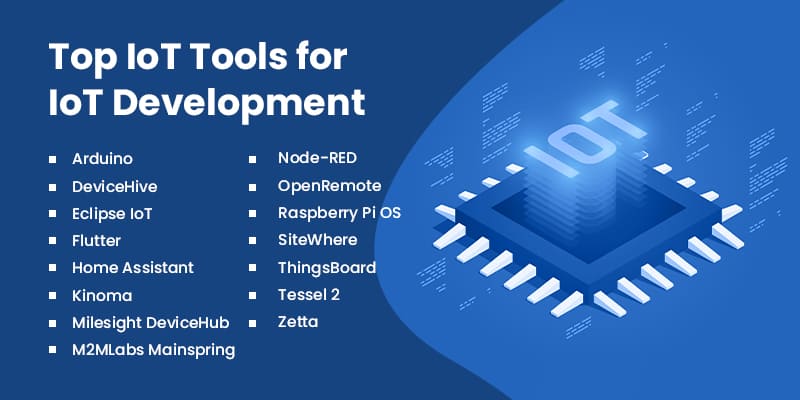
IoT development platforms provide a framework to design, manage, and deploy IoT applications. These platforms simplify integration between devices, sensors, networks, and cloud services. Popular IoT platforms include:
1. Arduino
- Ideal for beginners and prototyping.
- Supports multiple sensors, actuators, and modules.
- Uses Arduino IDE and C/C++ for programming.
- Extensive community support for IoT projects.
2. Raspberry Pi
- Single-board computer ideal for IoT projects requiring higher processing power.
- Supports Linux-based OS and multiple programming languages.
- Perfect for edge computing and AI integration in IoT.
3. Microsoft Azure IoT
- Enterprise-grade platform for building and managing connected devices.
- Supports real-time analytics, machine learning, and IoT security features.
- Integrates with cloud services like Azure Stream Analytics and Azure Digital Twins.
4. AWS IoT Core
- Cloud platform from Amazon for IoT device management and data ingestion.
- Supports secure device communication, data processing, and analytics.
- Offers integration with AWS Lambda, DynamoDB, and SageMaker.
5. Google Cloud IoT
- Offers device management, real-time data processing, and analytics.
- Integrates with Google’s BigQuery, AI/ML tools, and Pub/Sub for scalable IoT solutions.
- Suitable for both small-scale and enterprise IoT deployments.
Essential Tools for IoT Development
IoT development requires both hardware and software tools to streamline design, testing, and deployment. Some key tools include:
1. Hardware Prototyping Tools
- Sensors: Temperature, humidity, motion, pressure, and gas sensors.
- Microcontrollers: Arduino, ESP8266, ESP32, STM32, and Raspberry Pi.
- Actuators: Motors, relays, and servos for physical interactions.
2. Development IDEs
- Arduino IDE: Simplified environment for Arduino boards.
- PlatformIO: Advanced IDE supporting multiple boards and frameworks.
- Thonny / PyCharm: For Python-based IoT development, especially with Raspberry Pi.
3. IoT Protocol Tools
- MQTT: Lightweight messaging protocol for IoT devices.
- CoAP: Constrained Application Protocol for low-power devices.
- HTTP/HTTPS: Standard protocol for communication with web services.
4. Simulation and Testing Tools
- Cooja / Contiki OS: For simulating IoT networks.
- IoTIFY: Cloud-based simulator for testing IoT applications.
- Node-RED: Visual tool for wiring devices, APIs, and services.
Programming Languages for IoT Development
Selecting the right programming language is crucial for performance, reliability, and scalability of IoT devices. Some commonly used languages include:
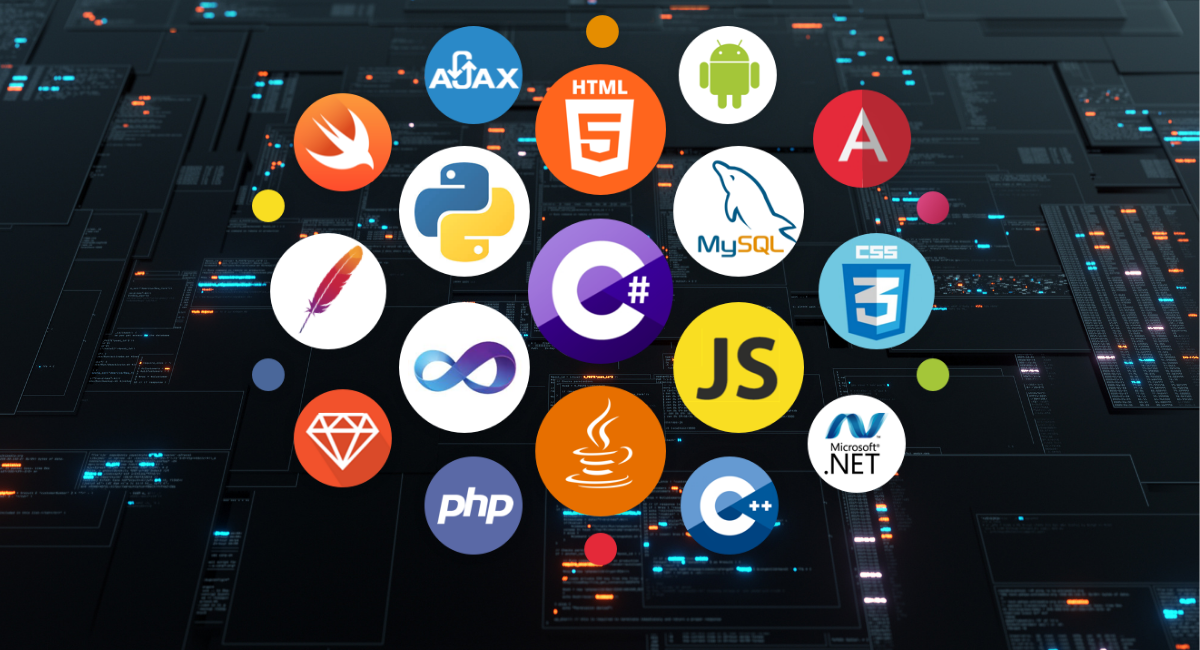
1. C and C++
- Widely used for microcontrollers and low-level device programming.
- Provides direct hardware access and high performance.
- Commonly used in Arduino and embedded systems.
2. Python
- Popular for Raspberry Pi and edge computing.
- Easy to learn with extensive libraries for IoT projects.
- Ideal for rapid prototyping and integrating machine learning.
3. Java
- Platform-independent and used for IoT applications requiring scalability.
- Suitable for Android-based IoT apps and backend integration.
4. JavaScript (Node.js)
- Used for IoT projects with real-time web communication.
- Node.js supports asynchronous programming for efficient device communication.
5. Rust
- Growing in popularity due to memory safety and performance.
- Ideal for IoT devices with strict resource constraints.
6. Embedded C / MicroPython
- Embedded C is ideal for low-level microcontroller programming.
- MicroPython brings Python-like syntax to constrained devices.
IoT Development Workflow
An efficient IoT development workflow ensures reliability and scalability:
- Define Requirements: Determine what the IoT solution aims to achieve.
- Select Hardware: Choose sensors, actuators, microcontrollers, and connectivity protocols.
- Choose Platform and Tools: Select the IoT platform, IDE, and development tools.
- Programming and Integration: Write code for data collection, processing, and communication.
- Testing and Simulation: Test devices in controlled environments before deployment.
- Deployment: Connect devices to the cloud or local network.
- Monitoring and Maintenance: Continuously monitor, update, and secure devices.
Challenges in IoT Development
Despite the opportunities, IoT development comes with challenges:
1. Security Risks
IoT devices are often targets for cyberattacks due to weak default passwords, unencrypted data, and unsecured APIs.
2. Device Interoperability
Different devices, platforms, and protocols may not communicate efficiently, requiring standardization and integration efforts.
3. Scalability
Scaling IoT networks while ensuring reliability and low latency is a challenge for large deployments like smart cities.
4. Data Management
IoT devices generate massive amounts of data, requiring efficient storage, processing, and analytics solutions.
5. Power and Resource Constraints
Many IoT devices are battery-powered and have limited processing capacity, making efficient programming critical.
Best Practices for IoT Development
- Focus on Security from Day One: Implement encryption, authentication, and secure communication protocols.
- Select the Right Protocols: Use MQTT, CoAP, or HTTPS based on device capabilities and network requirements.
- Choose Scalable Platforms: Opt for cloud platforms that can handle increasing devices and data.
- Standardize Data Formats: Ensure consistent data structure across devices for easy integration.
- Test Thoroughly: Use simulators, prototypes, and real-world testing to ensure reliability.
- Optimize Power Consumption: Design software to minimize energy use for battery-powered devices.
- Plan for Maintenance and Updates: Implement over-the-air (OTA) updates and monitoring tools.
Future Trends in IoT Development
- Edge Computing Integration: Processing data locally reduces latency and improves real-time decision-making.
- AI and Machine Learning: IoT devices will increasingly incorporate AI to make intelligent decisions locally.
- 5G Connectivity: Faster, low-latency networks will enable more responsive IoT systems.
- IoT Security Enhancements: Focus on blockchain, encryption, and authentication standards to protect connected devices.
- Interoperability Standards: Efforts to standardize protocols and data formats will simplify development and integration.
Conclusion
IoT development is at the forefront of digital innovation, connecting devices, systems, and users in ways that transform industries. By understanding the platforms, tools, and programming languages required for IoT development, developers and organizations can build scalable, secure, and efficient IoT solutions.
Whether creating smart homes, industrial automation systems, or wearable technology, following best practices, selecting the right platform, and programming efficiently are key to delivering reliable IoT experiences. With advancements in AI, edge computing, and 5G, the future of IoT development is poised for rapid growth and unprecedented opportunities.



Related Posts

Medicare, Medicaid, and Beyond: Your Guide to Public Health Insurance in the USA
Cryptography: Developing Systems to Secure Data and Communications
Security Information and Event Management (SIEM): Monitor and Analyze Security Logs Effectively

BOE’s Struggle with iPhone OLED Production: Impact on Apple and the Display Industry

Penetration Testing: Identifying Website and Network Vulnerabilities
Weather App Development: Building a Real-Time Weather Application Using OpenWeatherMap API
Smart Energy Management System: Optimize Energy Consumption Using IoT, Sensors, and Actuators

Wearable Device Development: Track Fitness, Health, and Environmental Data with Arduino or Raspberry Pi

Predictive Modeling Using Machine Learning: A Complete Guide for Businesses

Predictive Modeling: Using Machine Learning to Predict Customer Churn, Sales, and Business Outcomes

Data Visualization Dashboard Development: Visualizing Insights Using Tableau, Power BI, and D3.js
Social Media Platform Development Using React, Node.js, and MongoDB
Blog Website Development: Using WordPress CMS or Building a Custom Blog with HTML, CSS, and JavaScript

Predictive Maintenance: Building a Machine Learning Model to Predict Equipment Failures and Reduce Downtime
Sentiment Analysis: Building a Model to Analyze Text Data and Determine Sentiment

Image Classification: Develop a Deep Learning Model to Categorize Images
Chatbot Development: Build a Conversational AI Chatbot Using NLP and Machine Learning

Tech Industry Trends: Job market, skills in demand, and future prospects

Nanotechnology: Applications, Benefits, and Potential Risks
Change Management: Implementing Digital Transformation, Training, and Adoption

VR and AR Applications: Gaming, Education, and Enterprise Use Cases

Cloud Security: Data Protection, Access Control, and Compliance
Cloud Migration: Strategies, Benefits, Challenges, and Best Practices

French Court Ruling on Apple’s Tracking: App Tracking Transparency Stands

Robotics Breakthrough: Handy Robot That Can Crawl and Pick Up Objects

Apple, Google Announce Multi-Year AI Collaboration Using Gemini: A New Era for AI Assistants


PTA Tax Reduction: What It Means for Mobile Users in Pakistan

Gul Plaza Fire: How a Deadly Inferno Exposed Karachi’s Safety Failures

Verizon Outage Update Critical Service Restored After 10-Hour



The Importance of Data Analytics in Business Decision-Making
The Future of Autonomous Vehicles

75 Countries Visa Pause: What It Means for Global Travel and Immigration

School Closing in USA What Parents Should Know
School Closing in USA, What Parents Should Know


The Best Smartphones for Photography in 2026: Capture Every Moment in Stunning Detail

WordPress Not Loading: Reasons and How to Fix It

How to Fix Slow Loading Issues in Google Chrome
No-Code Business Ideas That Make Millions in 2026

How to Become a Tech Entrepreneur in 2026

How to Create a Successful YouTube Channel in 2026

Best Free Video Editing Software for YouTubers in 2026

How to Make Money Online in Pakistan: Proven Ways to Earn in 2026

Top 5 Laptops for Gaming in 2026: Ultimate Picks for Every Gamer

10 Ways to Boost Your Laptop’s Battery Life

Review of the Latest Smartwatch Trends: What’s Hot in Wearable Tech

Samsung vs iPhone Cameras: Which Is Better for Photography in 2026?
How AI is Changing the Way We Live and Work: Transforming Everyday Life

How to Build a Gaming PC: A Step-by-Step Beginner’s Guide

The Best Password Manager: Secure Your Digital Life in 2026
The Future of Drones in Pakistan: Transforming Industries and Innovation

How to Speed Up Your Laptop: Simple Tips That Actually Work

The Ethics of Facial Recognition Tech: Balancing Innovation and Privacy
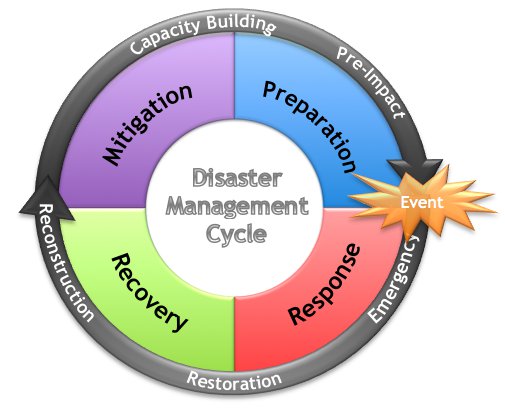
The Role of Tech in Disaster Management: Saving Lives Through Innovation
The Future of 3D Printing: Transforming Manufacturing and Beyond

The Best Free Antivirus Software: Protect Your Devices Without Paying

How to Protect Your Phone from Hackers: Essential Security Tips

The Top Tech Conferences in Asia: Where Innovation Meets Opportunity

The Pros and Cons of Online Shopping: A Complete Guide for Modern Consumers

The Future of Virtual Assistants: Smarter, More Human, and Everywhere

Top Tech Myths Debunked: Separating Fact from Fiction

How AI is Changing Customer Service: Enhancing Support and Experience

Pakistan Top Tech Influencers to Follow: Insights, Reviews & Innovation
Best Remote Development Collaboration Tools Software 2026

The Rise of E-Sports in Pakistan: Gaming as a Professional Career

The Impact of Technology on Pakistan Education System : Transforming Learning and Teaching

The Top Tech Companies to Work for in Pakistan: Careers, Culture, and Opportunities
How to Protect Your Data Online: Tips for Cybersecurity and Privacy

The Role of Women in Pakistan Tech Industry: Breaking Barriers and Driving Innovation

The Dark Side of Social Media: Addiction & More
Coding for Kids: Is it Worth the Hype?
The Impact of IoT on Daily Life: Transforming How We Live, Work, and Interact

Top Tech Conferences in Pakistan: Networking, Innovation, and Growth Opportunities

The Future of Electric Vehicles in Pakistan: Opportunities, Challenges, and Growth

The Best Productivity Apps for Students: Maximize Learning and Time Management

Pakistan’s Digital Payment Revolution: Transforming Commerce and Financial Inclusion


The Impact of Technology on Pakistan’s Economy
Top Programming Languages to Learn

The Rise of E-Learning Platforms: Revolutionizing Education

Human-AI Collaboration Tools: AI as a True Teammate Enhancing Productivity and Creativity
Low-Code, No-Code, and AI-Assisted Dev: Democratizing Software Development with AI-Powered Tools

Generative AI 2.0: Multimodal AI systems that combine text, visuals, code, and data, unlocking new enterprise applications
AI Governance and Regulation: Ensuring AI Transparency, Fairness, and Accountability
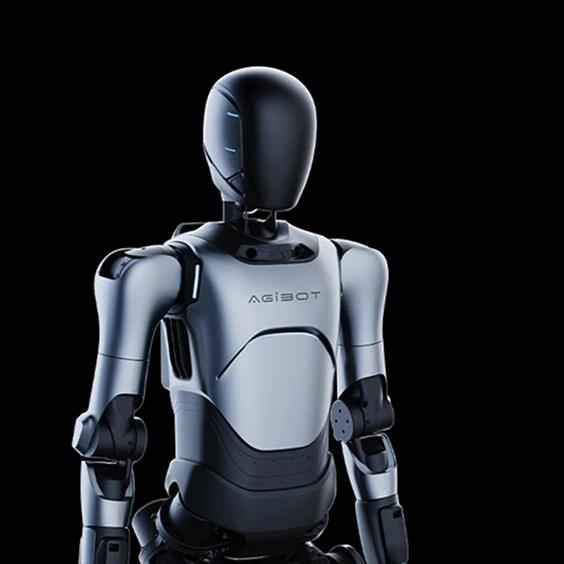
Humanoid Robots: AGIBOT’s Production-Ready Robots Are Changing Industries
AI in Everyday Life: How AI Is Transforming Daily Tasks and Experiences

AI in Healthcare: How Machine Learning Is Revolutionizing Patient Care

Gaming on the Go: The Evolution of Mobile Gaming

The Ethics of Technology: Balancing innovation with responsibility

Virtual Reality: Transforming the Way We Experience the Digital World
Demystifying Quantum Computing: What You Need to Know

The Role of Internet of Things in smart cities (IoT) in Shaping the Future of Cities
The Top Emerging Tech Trends in Pakistan

The Benefits and Drawbacks of Virtual Reality in Education

How Blockchain is Revolutionizing Industries Beyond Crypto currency

The Pros and Cons of Facial Recognition Technology

The Rise of Smart Homes: How Technology Is Changing the Way We Live

Cybersecurity in the Age of Remote Work: Challenges and Solutions

The Future of Artificial Intelligence: Trends to Watch
The Benefits of Microservices Architecture for Modern Applications
The Role of Artificial Intelligence in Predictive Maintenance

How Businesses Can Leverage Social Media Analytics for Growth

The Impact of Quantum Computing on Cybersecurity: A New Era of Threats
The Benefits of Serverless Computing 2026, The Architecture for Modern Applications

Why Businesses Should Prioritize Digital Transformation in 2026

The Potential of Augmented Reality in Education and Training
The Role of DevOps in Modern Software Development: Benefits and Challenges

Cloud Computing for Small Businesses: Benefits and Best Practices

The Future of Work: How Automation and AI Are Transforming the Job Market

Blockchain in Supply Chain Management: A Game-Changer for Transparency and Efficiency

Data Analytics: Unlocking Business Insights and Driving Growth

5G for Businesses: Leveraging Next-Gen Connectivity for Growth

Cybersecurity in the Age of IoT: Threats and Opportunities
The Future of E-commerce: How AI is Revolutionizing Online Shopping

Birdbuddy Smart Bird Feeder Launches at CES 2026: Birdbuddy 2 and Birdbuddy 2 Mini

Descriptive Set Theory and Computer Science: A New Bridge Links the Strange Math of Infinity to Algorithms

Most Anticipated Video Games 2026 That Gamers Can’t Wait For

Voicebuds: Subtle Launches Next Generation Earbuds for Voice Computing

Robots: Transforming the Future of Technology and Daily Life

Graphic Designing: The Art and Science of Visual Communication

Xthings Smart Home Devices at CES 2026 Redefine Home Security and Automation

SwitchBot Onero H1 Home Robot Redefines Smart Living at CES 2026

Beats Solo 4 Headphones Deal: Amazon Slashes $70 Off in All Colors

Digital Marketing Services for Small Businesses: Simply Social Media LLC Expands to Drive Growth
Why Japan’s Internet Feels Unusual to Outsiders — But Makes Sense to Locals


ASUS Unveils ROG Strix XG34WCDMS Featuring a 34-Inch 280Hz 5th-Gen QD-OLED Display

The Top Agentic AI Browsers to Watch in 2026